

Bed Bug Control Service in Dhaka: ISO-Certified Charpoka Treatment by US Pest Control
US Pest Control provides bed bug control services in Dhaka, Bangladesh, using inspection-led treatment by technicians supervised by Harun Or Rashid, who has 20 years of experience. We are ISO 9001:2015 certified and government-licensed for commercial pest control, and we treat homes, offices, hospitals, restaurants, and factories.
Prefer to call? 01611-162281
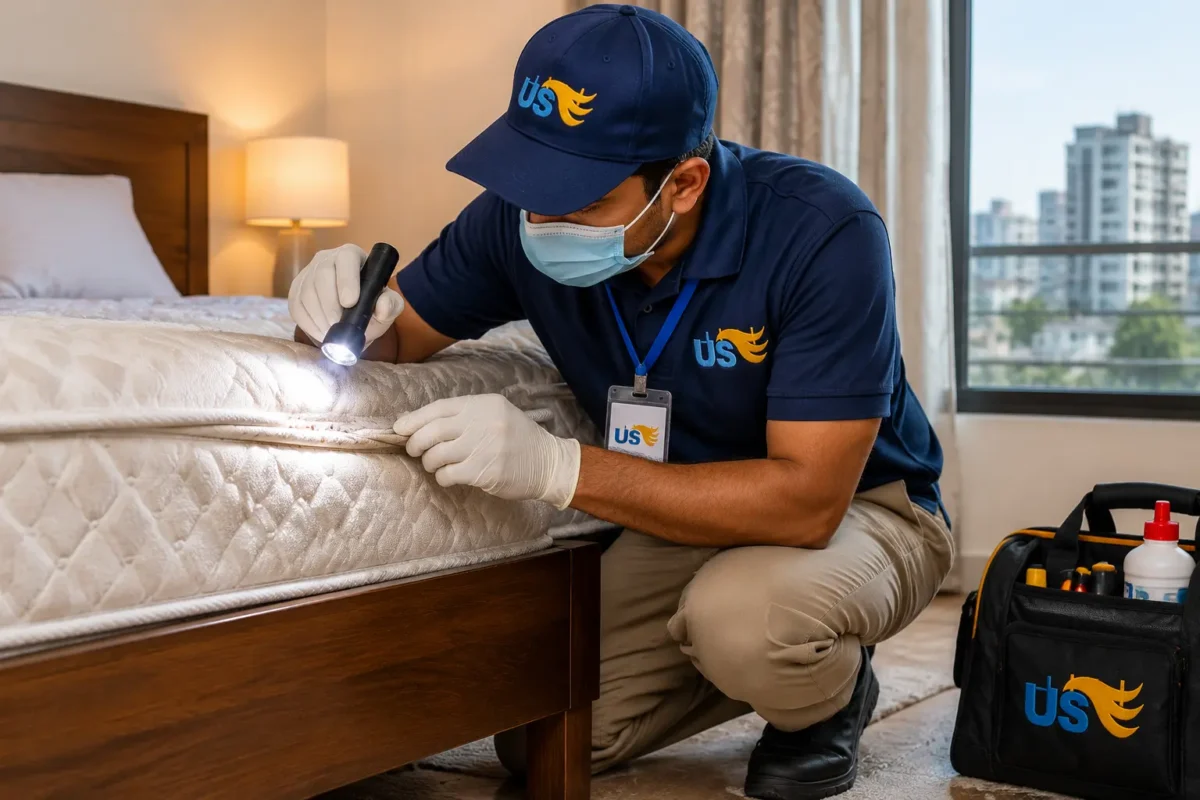
What Are Bed Bugs (Charpoka)?
Bed bugs (charpoka, ছারপোকা) are small, flat, wingless insects that feed on human blood, usually at night. The two species that infest homes are Cimex lectularius, the common bed bug, and Cimex hemipterus, the tropical bed bug found in warm regions such as South Asia.
Adults are reddish-brown, oval, and about 4–5 mm long, roughly the size of an apple seed. They hide in tight cracks during the day and come out to feed for about 5–10 minutes.
-
Eggs
About 1 mm, white, and glued into crevices. They hatch in roughly 6–10 days.
-
Nymphs
Young bed bugs pass through five instars and need a blood meal before each molt.
-
Adults
Can survive for months without feeding, which is why an empty room does not clear an infestation.
Signs of a Bed Bug Infestation
Confirming an active infestation early prevents widespread distribution throughout a property and reduces physical and psychological distress. Property owners should look for these distinct indicators:
-
01
Bite Marks
Red, itchy welts appearing on exposed skin during sleep, frequently arranged in linear clusters or rows.
-
02
Fecal Spotting
Dark brown or black liquid fecal spots deposited on mattress seams, box springs, bed frames, and adjacent walls.
-
03
Blood Stains
Small rust-colored blood smears on bed sheets or pillowcases caused by crushed engorged bugs during sleep.
-
04
Shed Skins (Exuviae)
Translucent exoskeletons left behind as juvenile nymphs progress through their five developmental instars.
-
05
Musty Odor
A distinct, sweet, and musty scent emitted by scent glands during heavy infestations.
-
06
Live Insects
Visual confirmation of adult bugs, nymphs, or pearl-white eggs tucked tightly inside narrow crevices and harborage zones.
Bed Bug Bites vs Mosquito vs Flea Bites
Bites alone are unreliable for diagnosis, so compare the pattern, the body location, and other clues.
Scroll horizontally to view all three bite comparisons.
| Feature | Bed Bug Bites | Mosquito Bites | Flea Bites |
|---|---|---|---|
| Primary Location | Face, neck, arms, shoulders, and legs (exposed areas during sleep). | Any exposed skin surface, often outdoors or near entry points. | Lower legs, ankles, and feet primarily. |
| Visual Pattern | Linear rows or clustered itchy welts (“breakfast, lunch, and dinner”). | Random, scattered, raised pink-to-red bumps. | Small, highly clustered red dots surrounded by a halo. |
| Timing of Reaction | Can take 1 to 14 days to appear visibly on skin. | Immediate or within hours of the bite. | Immediate or within several hours. |
Note: If individuals experience severe allergic reactions, secondary skin infections, or systemic symptoms from insect bites, they should consult a medical professional immediately.
Bed bugs are not known to transmit human pathogens or diseases.
Why Bed Bugs Spread in Dhaka Homes and Buildings
Bed bugs spread through human movement and shared building structures, not through poor hygiene.
- Shared walls and ducts in apartment buildings let bed bugs travel between units.
- Flat-sharing and frequent tenant turnover increase exposure.
- Student messes and hostels see frequent activity due to shared furniture and constant luggage movement.
- Luggage and bags from travel, including hotels, buses, and trains, are a common hitchhiking route.
- Second-hand furniture and mattresses can carry live bugs or eggs into a new home.
An infestation is not a sign of an unclean home — bed bugs are attracted to warmth and the carbon dioxide people exhale, not dirt.
Where Bed Bugs Hide
Bed bugs possess extremely thin, flat exoskeletons that allow them to squeeze into microscopic crevices away from light. Technicians prioritize these primary harborage zones during inspections:
-
01
Mattress and Box Springs
Seams, tufts, piping, zipper flaps, and internal wooden frames.
-
02
Bed Frames and Headboards
Joint connections, screw holes, carving grooves, and wall-mounting brackets.
-
03
Bedroom Furniture
Nightstands, drawer slides, wardrobe interiors, and upholstered armchair seams.
-
04
Room Perimeter
Baseboards, loose wallpaper edges, electrical switch plates, picture frames, and carpet tack strips.
Why DIY Sprays and Home Remedies Often Fail
Over-the-counter aerosol sprays, kerosene washes, and unverified home remedies consistently fail to resolve established infestations due to several biological and technical factors.
-
1
Direct contact sprays only eliminate visible surface bugs while leaving deep harborage populations intact.
-
2
Furthermore, insect eggs possess a protective chorion shell that shields them from standard consumer pesticides, allowing new nymphs to hatch undisturbed.
-
3
Misapplied or sublethal chemical doses can also cause insects to scatter into adjacent rooms, widening the infestation zone, and contribute to insecticide resistance.
Our Bed Bug Treatment Process
-
1
Inspection
A trained technician inspects the mattress, bed frame, furniture, and surrounding areas to confirm bed bug presence and map out harborage sites.
-
2
Treatment Plan
Based on the inspection, we build a customized treatment plan, which may include eco-friendly insecticides, steam, and heat, matched to the severity and layout of the space.
-
3
Treatment
Technicians apply the plan using eco-friendly insecticides, steam, and/or heat treatment, targeting mattress seams, bed frames, furniture joints, and other confirmed harborage points.
-
4
Follow-Up Inspection
We return for a follow-up inspection around 14 days after treatment to check for any activity from eggs that may have hatched since the first visit.
-
5
Prevention Guidance
We provide practical guidance on mattress encasements, luggage habits, and early warning signs to reduce the risk of reinfestation.
How to Prepare Before Treatment and What to Expect After
Proper preparation maximizes the exposure of chemical or thermal treatments to hidden harborage zones.
Preparation Checklist
- ✓ Strip all bed sheets, pillowcases, and blankets, and launder them in hot water above 60°C where fabric care instructions permit. Follow your technician’s instructions for suitable heat drying.
- ✓ Empty all bedside drawers, wardrobes, and storage compartments located near sleeping areas.
- ✓ Clear items away from baseboards and room perimeters to provide technicians unobstructed access.
- ✓ Safely store all food items, cooking utensils, pet bowls, and children's toys in sealed plastic bins.
- ✓ Arrange for family members and pets to vacate the treatment area during application and remain away until the product-specific re-entry requirements and technician’s instructions have been met.
Post-Treatment Timeline
-
Day 0 — Application
Keep the treatment area vacated until the product label’s re-entry requirements have been met. Follow all drying and ventilation instructions. Live activity may be visible as insects encounter treated zones.
-
Days 1–3 — Initial Response
Initial knockdown may occur. A temporary increase in visible crawling may occur as surviving bugs leave hiding places. Do not wash treated baseboards unless your technician advises you to do so.
-
Day 7 — Continued Monitoring
Nymphs may emerge from remaining eggs. Continue monitoring and report live activity to our team. Follow your technician’s instructions for vacuuming dead insects and cleaning treated areas.
-
Around Day 14 — Follow-Up Evaluation
US Pest Control technicians evaluate remaining activity and determine whether additional treatment or monitoring is needed.
Keep potentially infested items contained. Bag items before moving them and avoid transferring untreated belongings into unaffected rooms.
The timeline is a guide. Treatment response and follow-up needs depend on the infestation and chosen methods. Follow the preparation, re-entry, and cleaning instructions provided for your property.
Bed Bug Control Cost in Dhaka
Bed bug treatment cost in Dhaka varies based on specific variables rather than a fixed standard rate. Pricing is determined by property size measured in square footage, total room count, the severity and density of the infestation, and whether the space is residential or commercial. Contact US Pest Control directly at 01611-162281 for an accurate quote tailored to your property.
Properties We Treat
-
Homes and Apartments
-
Offices
-
Hospitals and Clinics
-
Restaurants
-
Garment and Textile Factories (EPZ)